Friday, June 18, 2021

1991, ProSet MusiCards....and the legendary New Edition


I think I first saw them at the Phantom of the Attic

            Despite macabre-esque name, the Phantom of the Attic was a comic book shop in the Oakland (i.e. college epicenter) section of Pittsburgh. But I was still in high school. I know that it was 1991, but I can’t tell if it was early or later in the year. And that’s important. It’s the difference between me being a Junior or Senior. The difference between me having more free periods during the day, or maybe taking the chance of getting caught by one Mr. Wheeler during lunch.

Mr. Wheeler was in charge of discipline at my school. He stalked around the place calling boys Jumbo or Hambo, or whatever stupid name he could come up with. He was in charge of making sure we had our hair short, wore no facial hair, and basically marched around like good automatons for Jesus. Wheeler wore short-sleeve shirts in the dead of winter with no jacket. He combed Oakland during lunches trying to catch truant students who’d rather spend the time pouring over CDs in Record Mart and super-sizing their lunches at Mickey D’s over the stifling environment in the cafeteria, choking down whatever was being served that day.

You did not want to get caught being a truant by Mr. Wheeler.

            Especially for comic books.

            Or for cards.

            Non-sports cards to be exact.

1991 ProSet Super Stars MusiCards.

Anyone remember these babies?


Whether I was skipping lunch (probably not…I was a mediocre student at best, but I wasn’t a truant) or it was one of my free periods, I know it was the Phantom of the Attic comic book shop that stocked these MusiCards. Phantom didn’t generally stock cards that I was interested in. They trafficked in non-sport cards and I wasn’t a real non-sports card guy. I dabbled. A pack of Batman movie cards here. A pack of Garbage Pail Kids there. The closest I came to all-out non-sports card fanaticism was in the summer of 1983, when my brother, Phineas and I bought Return of the Jedi cards. I probably had more Jedi cards than baseball cards in 1983.

But those cards were all for not.

Anyone reading this blog knows what HAPPENED to all of my 1980-1983 cards.  

But I always held out hope that Phantom would get into the sports card game. When I went there with my comic book loving friends. I’d peruse the counter area in hopes that the store would suddenly have packs of Topps, Fleer, Donruss, Score or Upper Deck. But for as geeky as comic book collecting and sports collecting were, the two rarely crossed paths where commerce, that wasn’t a flea market or yard sale, was concerned. Music and sports cards most certainly never crossed paths, unless it was me at home going through my cards while I had a cassette or the radio playing.

But there they were sitting there right on the counter.

ProSets Super Stars MusiCards.

I was instantly intrigued by them.

I knew the name ProSet from their foray into NFL football cards in 1989. I’d bought my fair share because, as with everything else card-related in the late 1980s/early 1990s…they were everywhere. And I was buying anything and everything sports card related. But music cards? Well, that was new to me. Not new to the hobby. The non-sports card world had been rife with music cards for years. Off the top of my head, I know that Elvis had his own cards. So did The Beatles and The Monkees. The Partridge Family had cards. Michael Jackson had his own card set. I’m sure one can find a trading card of Frank Sinatra.


And in 1989 Topps put out their first sets for these strapping young men.

By 1991 I was getting heavy into buying music. Mostly R&B and Rap music. I had more disposable income by then. In April of 1991, I got a mall job slinging sports clothing like Starter hats and jackets. Bye-bye lowly newspaper route, rabid dogs, and people not answering their doors when I knocked. My new mall money went into sports cards, yes. But it also went into CDs and cassette tapes. If I’m being honest, more of the paycheck was going to music rather than cards. The cash certainly wasn’t going into a savings account. It wasn’t in my restless, profligate soul to save a dime, despite my parent’s encouragement to do so. I never had money so I spent it when I did.

That’s the thing when people who have no money suddenly get it.

You want to spend it.

I wanted to spend my money on ProSet Super Stars MusiCards.

The set itself (340-cards over two series) is a curiosity and I’m curious as to whom it really appealed to back then. MusiCards encompasses such a wide range of artists (and musical tastes) that finding someone equally jazzed about getting Huey Lewis, Sonic Youth and Al B. Sure! in the same pack had to be a feat. MusiCards certainly tapped into the zeitgeist of the times. Vanilla Ice and M.C. Hammer had five cards each in the set. 


Of course, so did Led Zeppelin.

See what I mean about the set being all over the place?

I’m not saying Zep fans and the accolades of one Robbie Van Winkle or Stanley Burrell wouldn’t occasionally break bread. But I don’t think they were getting stoned and putting on tunes together. They probably weren’t collecting cards either. Who in the hell DID this set appeal to? Sportos? Motorheads? Geeks, sluts, bloods, wasteoids or dweebies? Dickheads?  The only thing that truly unifies MusiCards is their gaudy design that SCREAMS 1991.

Those slanted neon bars on the top and bottom of the cards.


That paw print or Rorschach test pattern (or whatever the hell) on the backs.

MusiCards are sooooooo 1991, they make me want to get myself a chicken fajita from McDonald’s, crack open a can of Pepsi Wild Bunch, pop a Color Me Badd CD in the stereo or throw on MTV, and just chill out for a few hours until the Fresh Prince or 90210 comes on the TV.


I’d actually forgotten all about them until a few years ago when my brother sent me these in the mail.


The first card is of Ralph Tresvant (card no. 297), the de facto lead singer in 1980s R&B group New Edition. The second card is of R&B swing kings (and bandmates of Mr. Tresvant) Bell Biv DeVoe, of never trusting a big butt and a smile fame. The BBD card is actually from ProSet’s MusiCards Yo! MTV Raps set, although Messers Bell, Bivins and DeVoe do, in fact, have two cards in the MusiCards set proper.

The backs of the Yo! MTV Raps cards are just as flashy and of their era.


My brother sent me them because he’s a nice guy…and he knows how huge a New Edition fan I am. Still am to this day. There was a time in my young life where I daydreamed and hoped to become the first white member of New Edition. Why not? I can carry a tune. And I know all the lyrics.

It’s the dancing that would’ve counted me out.

I talk a lot about baseball cards on this blog, about baseball card firsts for me, etc. But New Edition’s 1984 MCA debut record has the distinction of being the first album (bought on cassette) that I ever purchased with money that was my own.


I used to say that it was birthday money. But the NE album came out in July of 1984, so I’m beginning to think that I must’ve been suckered into doing some kind of chores for that cash. Like I said above, money burned holes in my pockets back then.

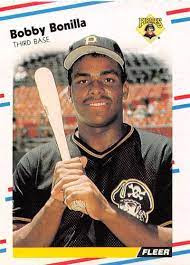
Like a Barry Bonds or Bobby Bonilla card in 1991 sports card packs, cards featuring members of New Edition would’ve been the ones I was looking for in those 1991 packs of MusiCards. My boys from Boston were HUGE in 1991. But not as a collective. Not having had an album out since 1988’s Heart Break, the members of New Edition went the solo route in 1990. And they were pretty successful at it. Bell Biv Devoe’s debut album Poison went to No. 5 in the U.S. charts (number 1 on the R&B charts), Ralph Tresvant’s debut solo album hit No.17 on the U.S. charts (No. 1 in R&B), and Johnny Gill’s album went to No.8 and No. 1 respectively as well.

Only resident bad boy, Bobby Brown, didn’t release an album.

The members of New Edition were everywhere in the first few years of the 1990s.

On MTV.

On BET.

On awards shows.

In packs of cards.

I was so jazzed to get the Tresvant and BBD cards, that I went online and tracked down the other New Edition related cards from the ProSet Super Stars MusiCards set.


As for MusiCards themselves. They’re still out there. When I went home to Pittsburgh in April, an antique store that I visited had the cards selling for $1 per pack. I should’ve bought some. If they’re still there when I visit in July…I just might. Willie Stargell and Terry Bradshaw cards be damned. I want me an INXS rookie card.

Or maybe a double of the New Edition card.

 Thanks for reading! Happy Collecting!

 If you’d like to see the checklist for 1991’s ProSet MusiCards you can do so HERE

 If you’d like to learn more about seminal 1980s-1990s R&B supergroup New Edition, you can do so HERE or watch Part 1 of their 3-part BET bio pic HERE

NEXT FRIDAY: 2021 Topps Series 2…and all of the baggage that comes with it.

While we're on the subject of music and MusiCards....I have a new novel out The book is entitled 

P-Town: Forever 

P-Town: Forever is about five members of a failed singing group who get back together in their 40s after a single they recorded 20 years ago becomes a sudden semi-hit. If you’re interested you can find it HERE  and you can find it HERE where you can also read the first chapter.

...Or you can reach out to me via this blog, as I have copies ON HAND:


Friday, June 11, 2021

1988 Donruss and the search for the word ubiquitous


Ubiquitous: existing or being everywhere at the same time: constantly encountered: widespread (Merriam-Webster)

I wouldn’t have known the word ubiquitous back in 1988.

In 1988, I was a fourteen-year-old fat kid trying to class-clown my way out of eighth grade and into another summer of wiffle ball and baseball card collecting. I was subliminally trying to suppress the idea that I’d be going to high school, an all-boys CATHOLIC high school, come the fall. I was averse to change. I was a B-student at best. My eighth-grade teacher was a miserable, humorless nun who was seemingly always on my ass. She once made me carry my possessions around in a garbage bag for a week because I’d failed to clean my desk to her specifications.

She made me sit next to her in church because I was apt to mock the priest.

That eighth-grade year in 1988, I did an art project on Roberto Clemente. Drew him from memory because there was no way on God’s green earth that I had a Clemente card at fourteen-years-old. I drew Clemente’s 1966 Topps card. The goddamned nun argued with me that no one ever called the great Roberto Clemente “Bob.” I had no card to show her. There was no internet to prove the old bag wrong. She gave me a B- on the art project and told me that I had no sense of history.

Maybe...but I knew my baseball cards


If anyone or anything was ubiquitous in the first-half of 1988, it was Sister Roberta.

This guy.

            And baseball cards.

            Also, there’s no discounting the ignorance of the Catholic church.

In 1988 the word ubiquitous seemed to define baseball cards. Formally relegated to drug stores, flea markets, the small crop of card shows that were taking over convention centers around the Pittsburgh area and, of course, the local card shop; 1988 was the year that I could find baseball cards seemingly everywhere. I found them in the grocery store nestled next to those Milky Way bars that kept me in husky pants. They were near the checkout in the toy stores that I was still wandering into at the mall, despite having officially declared myself too old for toy stores. You could find baseball cards in sporting good shops or at the newsstand where I went for my Batman comics. 1988s version of big box stores (anyone remember Hills Department Stores?) carried rack packs of baseball cards in a pre-courser to the current madness at Target and Wal-Mart stores.

Go for the baseball cards.

Stay for the blue-raspberry Slushee and hot pretzel.

I even found baseball cards in a rural gas station in Central Pennsylvania.

But we’ll get to that.

            The most ubiquitous of baseball cards in 1988 was Donruss. 


        1988 Donruss has been called the poster boy of the Junk Wax Era. It’s the collecting world’s red-headed step-child (am I still allowed to write/say things like that) that even the most desperate for something to open might shy away from on the open market. Everyone who collected cards during the Junk Wax Era had Donruss cards. Loads and loads of Donruss cards. They had enough Donruss cards to wallpaper their homes, or make a trail of cards from Peoria to the Taj Mahal. They made the Stan Musial puzzle ad nauseum. In short…Donruss cards were around.

            I’m not telling collectors something that they don’t already know.

            It seems obvious now all of these years later. But, you see, to a fourteen-year-old kid like me in 1988, the fact that I could all of the sudden even find Donruss cards anywhere I wanted was revelatory. Before 1988, Donruss cards were nearly impossible for me to find. They were at card show or hobby shops. To get to either of those I had to suffer the indignity of begging a ride from my folks. Or, if wanted to risk my life crossing highways noted for their dead, maybe I’d find a pack of Donruss at Statlander’s Pharmacy.

Pre-1988 Donruss cards were mythical in my neighborhood. They were the unicorn of baseball cards. The brand we all sought. When Sister Roberta told us stories about biblical miracles, I imagined Donruss cards showing up at the local Thrift Drug. On Sundays, when Father Bud droned on in his homily about Christ turning water into wine or rising from the dead, a few of us unimpressed kids were moved to think to ourselves… Yeah? Let’s see if the son of man can find any Donruss cards on the shelf?

                                   (Jesus...after NOT finding any Donruss cards)

            Ubiquitous: existing or being everywhere at the same time: constantly encountered: widespread.

            I didn’t know what ubiquitous meant in 1988. I just knew that I could find Donruss cards in the Giant Eagle. I could find them at Hills. I could find them in any of the Drug Stores I loitered outside of. I found them in Dunham Sporting Goods at the mall. G.C. Murphy’s had Donruss sitting right there next to the inaugural release of Topps Big Baseball cards (another indulgence of mine that year). I might not have known what ubiquitous meant, but I knew fate when I saw it. And fate was me finally coming face to face with Donruss baseball cards whenever I damned well pleased. Or it wasn’t fate but luck. My luck.

            I should’ve known they were mass-producing them.

            If Donruss cards were everywhere it wasn’t suddenly my good fortune.

Luck was another word I was unfamiliar with at my age.

            Fat fourteen-year-old kids didn’t have luck.

            Sister Roberta might’ve been right about me all along.

            So, I did what any card-brand starved kid my age would’ve done. I bought Donruss cards like they were going out of style. I bought a ton of them. I bought 1988 Donruss as if they were going to disappear off of the shelves tomorrow. Poof! Gone! Another dirty trick played on me. And then I’d be back to riding nothing but the Fleer and Topps train again (not that I wasn’t buying a ton of them and Score as well that year). I bought 1988 Donruss cards like they were investments. Wax packs of gold. They had to be because they’d been so rare before. Donruss cards were going to put me in a mansion, a limo; they were going to make me rich.

            Idiot.

            I bought so many Donruss cards in 1988, I was a Donruss kingpin. Because I’d been starved of them for so many years, I never even considered what it was that I was buying. That is to say, I wasn’t sure if I even liked 1988 Donruss cards. It was just buy, buy, buy, before they would suddenly go away forever. Back to that impossible place Donruss cards existed in before 1988. And I couldn’t let that happen. Looks and personal opinion be damned while in the moment. I had to have them. Personal reckoning would come later. It always did with purchases. There’d be plenty of time to ask myself if I liked 1988 Donruss.

            Did I like 1988 Donruss?

            Do I like 1988 Donruss now?

Well…kind of.

Along with being some of the most ubiquitous cards of the Junk Wax Era, 1988 Donruss tend to get slagged off for their aesthetic value as well...or lack thereof. I don’t think they’re as bad as some have made them out to be. Sure, the photos can get a bit fuzzier than some previous Donruss issues, but overall, I like them. I’m a fan of the crisp blue that Donruss used for both the front and back of the cards. I don’t particularly mind the touches of black and red surrounding the cards either.


And its ubiquitous presence some thirty-three years ago, allows 1988 Donruss to be a fun 660-cardset that you can still try and build on the cheap today; an increasingly hard thing to do with the current frenzy over baseball cards, one that has pushed into the Junk Wax Era. And the 1988 Donruss set actually has a few top rookies that stalwart Topps left out of that year’s issue or that Fleer decided to couple in their annoying dual rookie cards. Roberto Alomar, Mark Grace or Greg Jefferies anyone?


1988 is also chock-full of star cards and the cards of up and coming stars of that era.


For me it was all about getting the Pirates cards in 1988. The Pirates were finally playing good baseball in 1988. There were shades of great teams and great seasons to come. That year had second year cards for Barry Bonds and Bobby Bonilla. Andy Van Slyke, Mike LaValliere and Doug Drabek all made their regular series debut for the Pirates in 1988. Jose Lind’s Rated Rookie card was in 1988 Donruss. And just like those big rookies that Topps missed out on, 1988 Donruss had issued a card for a Pirates player, a rookie card, that I really wanted back then.


Ask me why I wanted it now and all I can say is we were crazy about the rookie cards back then.

Or it was cool to compare each brands team sets.

If I have a complaint about 1988 Donruss cards, it’s that the card stock seems thinner and of worse quality than in previous Donruss sets.

I.e., mass produced.

But I’m going to go out on a limb here. I’m going to say that 1988 Donruss, with the exception of the premier issue of Score, might be the best-looking set of a rather dull and rudimentary 1988 baseball card class.

Donruss:


Fleer:

Score:


Topps:

As for that rural gas station in Western Pennsylvania?

Parents sometimes get the idea that family trips are a good idea. I made the conscious and happy choice to not have children, so I don’t know if the folks think this is a good idea for the kids or if they need a concrete reason other than debt to prove the value or worth of a family foundation with things like vacations. Regardless, in the late summer of 1988 my family packed up the car and took my brother and I to Cook’s Forest, along with a couple of family friends and their kids. Cook’s forest is the kind of place where there are cabins and lakes and rivers, and lots and lots of trees full of animals that you didn’t see in the suburbs or city, or might not ever want to come face to face with in real life.

Think Deliverance with go-carts and horseback riding.


I was a fourteen-year-old kid who’d just graduated eighth grade and was getting ready to go into high school. I didn’t want to go on vacation with my family. I might’ve been a fat and lonely fourteen-year-old, but I was a fourteen-year-old nonetheless. My bedroom was becoming my fortress. The music that I was listening to, more a soundtrack to my life. I had my TV shows. There was the movies and the mall. There were baseball cards to sift through in the cool shade of my front porch. There were girls to pine for. The ubiquitous presence of girls was another thing to contend with in 1988. Like me or not…they were still there. In short shorts. In bikinis at pools.

What in the hell did I want to spend a weekend out in the woods for?

With my family no less.

The only thing that I really remember about that weekend, other than getting thrown off the go carts for driving recklessly, was my family stopping at that gas station in rural PA. My old man was a planner but he could also pinch a penny. Cook’s Forrest was only a couple of hours drive from Pittsburgh, not necessarily somewhere you’d have to gas up to get to. But my old man figured the gas would be cheaper the further away from the city.

Cheap gas was a unicorn to my old man.

Cheap gas was his Donruss.

So, we stopped at this run-down old gas station that looked like something out of a Stephen King novel. Same for the guy working it. It was the kind of place that time and modern convenience forgot. Flat Cokes sitting in a cooler waiting to die. Nudie magazines from two years before. Air fresheners that had lost their scent. Snacks whose expiration dates were of no consequence to anyone needing to eat from there. Stale cigarettes in yellowing packs. The nearly bare shelves housing dead batteries.

And 1988 Donruss.


Right there.

At the counter.

 Thanks for reading! Happy collecting!

If you’d like to learn more about 1988 Donruss you can do so HERE

If you’d like to learn more about the career of Tom Prince you can do so HERE and HERE

NEXT FRIDAY: We’re going to hang around 1988…and 1989…and 1990…and maybe even 1991. Yes, I’m doing a whole non-sports card post related to those ProSet Super Star MusiCards and the Yo! MTV Raps! Cards. It’s going to be a shameless self-promotion for my new novel, P-Town : Forever.

But maybe it’ll be fun as well.

And Remember....


.


Friday, June 4, 2021

Happy Pride Month : The Life and Times of Glenn Burke


I don’t remember where I first head the name Glenn Burke.

            It wasn’t because of the high five. A little back story for those who don’t know: Glenn Burke invented the high five…with a little bit of help from his Dodgers teammate, Dusty Baker, of course. Yes, a gay man in America invented the high five in October of 1977, congratulating his teammate Dusty Baker as he returned to home plate after hitting his 30th home run of the season. The fourth player on the Dodgers to do so that year. Eleven teams have done so since.

            But I don’t know Glenn Burke from there.


            ....Not the actual first high five...but Glenn and Dusty all the same...

            Sure, we high fived when we played sports. What red-blooded, American kid didn’t. But we didn’t discuss the high five. Didn’t seek out its origins. Never questioned its place in sports celebrations other than, well, that’s just what you do. We certainly had no clue that the high five was invented by Glenn Burke. The first man in Major League Baseball to come out to teammates and team owners as openly gay. A strong, proud, volatile, wildly talented man who played Major League Baseball for the Los Angeles Dodgers and Oakland Athletics from 1976 to 1979, until his open lifestyle subsequently got him run out of the game that he loved…almost as much as Glenn loved basketball.

            Happy Pride Month Folks!

            But I still don’t know where I first heard the name Glenn Burke. I don’t remember him being mentioned when outfielder Billy Bean (not the Moneyball guy) came out in 1999. Nor do I remember Major League Baseball honoring Glenn Burke during the 2014 All-Star game. I know that I heard about him long before I read Andrew Maraniss’ excellent new biography on him, entitled Singled Out. But I just can’t remember where.

            But it doesn’t matter.

            What matter is that Glenn Burke DID exist in Major League Baseball. That he’s a part of that history. Once called the next Willie Mays, Glenn Burke managed to play in 225 games in the Big Leagues, before the rampant homophobia drove him away from the sport. What matters is that Glenn Burke strove to be himself, openly and happily, in a sports world that accentuated the macho, the manly; in a sport that never could comprehend or understand that a gay man could play baseball at the top of his game just like anyone else.

            What matters is that we lived in a society then (and probably still do now) that worked to systematically try and take that pride and spirit of competition away from Glenn Burke.

            I don’t know where I first heard about Glenn Burke. But the point is, I did. And I’m happy to know about Glenn Burke. From his upbringing in Oakland to his feats on the basketball court to his time in Major League Baseball. Glenn was what us baseball card folks would’ve called a top prospect back in the day. He had the tools and he had the talent to be a perennial All-Star had homophobia not got in the way.

            And what was that homophobia? It was the Dodgers GM Al Campanis offering to pay for Glenn’s honeymoon if he’d only get married. To which Glenn responded, To a woman? It was legendary Dodger’s manager, Tommy Lasorda, being uncomfortable with Glenn’s relationship with his son, Tommy Jr, a man who’s own sad and tragic tale deserves some space in a book. It was the Dodgers organization, despite the protests of players on the team who had no issue with Glenn’s sexual orientation, claiming that Burke just “wasn’t happy here,” before trading him to the Oakland A’s for Billy North. It was A’s players refusing to shower with Glenn after games. It was legendary manager, Billy Martin, referring to Glenn Burke as a fag in front of whoever he wanted.

            It was a knee injury before the 1980 season.

            It was being sent down to Utah.

            It was the A’s releasing Glenn Burke from his contract.

            Glenn Burke’s life after baseball had its ups…and then it’s tragic spiral down. He found life in San Francisco after his baseball days ended, primarily in the Castro District. Glenn played competitive softball for years in the San Francisco Gay Softball League. He won medals in running in the 1982 Gay Games then did so in basketball in 1986. Glenn Burke’s number was retired by his high school. Inside Sports even did an article on Glenn Burke in 1982, making his coming out official to everyone outside of professional baseball.

            But Glenn Burke was driven out of baseball. He had no skills other than that of an athlete. Jobs and money were hard to come by. Glenn soon went threw his baseball savings. He wound up in a mentally abusive relationship. As so often happens in America, to quell the pain associated with not being accepted in society, of not being able to express feelings and love in the way American society deemed acceptable, Glenn Burke began to turn further and further to drugs. First cocaine. Then crack. In 1987, a car accident crushed his legs, and Glenn Burke’s life went into further decline. He went to jail for drugs. He lived on the streets. Glenn Burke, like so many gay young men in the 1980s and 1990s, contracted HIV, which turned into AIDS.

            Which the U.S. government didn’t care about.

            Which Ronald Regan failed to acknowledge until 1985.

            And then only in passing.

            Glenn Burke died of AIDS on May 30, 1995.

            A year in which 4.7 new HIV cases were estimated throughout the world.

            I don’t remember where I first heard the name Glenn Burke. But it was like I always knew it. And when Andrew Maraniss’ book on Glenn was schedule to come out, I was excited to see that someone was finally telling his story. And I wanted Glenn’s cards in my collection. He only has two that I know about. His 1978 Topps card, considered his rookie, and a 1979 Topps card of Glenn Burke with the A’s.


            I’m honored to have both of his cards in my collection.

            As for Singled Out: The True Story of Glenn Burke by Andrew Maraniss, I couldn’t have been happier as a reader. Because I write I don’t like to review books. It’s a policy that I have not to pass judgement on something that I know takes a lot of time, love, research, attention, and a dash of blood, sweat and tears. What I will say is that if you want the story of Glenn Burke, read Andrew’s book. He does an excellent job of putting Glenn on the page, so that he’s a living, breathing, complex human being.

Maraniss also does a fantastic job of placing Glenn’s life and his situation in baseball in context with the times that he was living in. Not only are we told of Glenn Burke’s journey, but we spend time with a few other gay trailblazers along the way. Readers also get to experience San Francisco during the beginning years of the AIDS crisis, a time when the Castro went from the gay epicenter to a ghost town full of sick men. A time when the U.S. government seemed openly content to let a generation of beautiful men die from a disease that they were both scared of, and thought of as a just retribution for those men simply not conforming to the hetero-normative life they were expected to live.

89, 343 people died of AIDS or AIDS related complications during the presidency of Ronald Reagan.

Remember:


                And:


        Thanks for reading! Happy collecting!

         If you’d like to know more about the life and career of Glenn Burke. I would suggest picking up Andrew Maraniss’ book Singled Out: The True Story of Glenn Burke which you can find HERE or HERE, or at any major book retailer. And if you shop indie…ask your clerks for it.

You can learn more about Glenn Burke HERE and HERE

***Shameless self-promotion No. 1***


I too have a few new books out there. The first is my new collection of poetry entitled Eating a Cheeseburger During the End Times. It’s out on Kung Fu Treachery Press and I’m pretty proud of this one. If you’re interested you can find it HERE and HERE.

***Shameless self-promotion No. 2***

I also have a new novel out. The book is entitled P-Town: Forever and is about five members of a failed singing group getting back together in their 40s after a single they recorded 20 years ago becomes a sudden semi-hit. If you’re interested you can find it HERE and you can find it HERE, where you can also read the first chapter.

...Or you can reach out to me on here.

NEXT FRIDAY:  We're going to take a look at 1988 Donruss. Why the set was everywhere and is ubiquitous with the Junk Wax Era...and why I still love it. I'll probably wrapt it up with some story about my youth but I haven't figured out which...yet.


Card Show Observations